Date: Wednesday, May 20, 2026
Location: Bond Life Sciences Bldg., Memorial Union South Tower and the Teaching for Learning Center
Details: All sessions are in person
Keynote Presentation: 9:00 a.m.
|
Keynote Presentation 9:00 a.m. – 10:15 a.m. |
|

Applying Motivation Research and Theory to Higher Education Classrooms
|
Featured Session 10:30 a.m. – 11:45 a.m. |
|
|
Activating Critical Thinking Capacities in the Age of AI Tracks: Teaching with AI, Critical Thinking, Effective Teaching Student use of GenAI can offload important thinking and learning across the curricula. Join this interactive presentation where faculty colleagues share approachable methods and classroom activities for stimulating critical thinking. Participants will brainstorm strategies to activate students’ existing critical-thinking muscles in the context of your own course-specific aims. We’ll also explore AI-relevant resources you can use to support student learning and success at a time when it can feel daunting. Participant Outcomes: – Participants will reflect on why the Age of AI presents both pain points and opportunities to revisit critical thinking pedagogies. – Participants will brainstorm how and when educators can activate existing capacities for critical thinking. – Participants will tour AI-related resources for critical thinking pedagogies. Facilitated by: Dr. Gualtiero Piccinini, Professor, Philosophy Dr. Michael Schneider, Assistant Professor, Philosophy Dr. Kevin Brown, Associate Professor, Theatre and Performance Studies Dr. Tori Mondelli, Founding Director, Teaching for Learning Center |
|
|
Awards Luncheon 11:45 a.m. – 1:00 p.m. |
|
| Emceed by Dr. Jim Spain, Vice Provost for Undergraduate Studies, the luncheon brings together faculty, staff, and campus partners to celebrate excellence in teaching across the university. During lunch, we will join the Campus Writing Program to honor award recipients for innovative approaches to writing pedagogy and to acknowledge exceptional contributions to Writing Intensive instruction. | |
|
Concurrent Sessions 1:15 p.m. – 2:15 p.m. |
|
| Universal Design in Action: Student-Designed Disability-Friendly Canvas Courses Tracks: Effective Teaching, Universal Design for Learning Discover how student teams in a Perspectives on Disability course transform Canvas sandboxes into universally designed, student-friendly homepages. Drawing from readings like Rebekah Taussig’s Sitting Pretty and Emily Ladau’s Demystifying Disability, student teams collaborate to apply Universal Design for Learning principles, including multiple means of representation, engagement, and expression, creating accessible course interfaces that reduce barriers for diverse learners. Participant Outcomes: – Identify Canvas accessibility barriers. – Implement student-friendly design principles. – Adapt assignments for their courses. – Integrate creative learning opportunities. Facilitated by: Dr. Rebecca Fenton, Assistant Teaching Professor, Health Sciences Department |
|
| Wellbeing in Leadership: Ensuring the Success of Those You Lead Tracks: Student and Faculty Well-Being This session introduces the concept of wellbeing leadership, what it is, why it matters, and how it shapes the wellbeing and success of those we lead. Participants will explore how wellbeing-focused behaviors enhance leadership effectiveness across roles such as mentor, supervisor, instructor, or colleague. The session will also guide attendees through ways to self-assess their own wellbeing leadership practices and offer strategies for strengthening these skills to better support the wellbeing of others. Participant Outcomes: – Understand the importance of leadership that enhances wellbeing behaviors in themselves and others. – Understand a means to evaluate and measure wellbeing leadership behaviors. – Understand how reflection can help develop strategies to enhance wellbeing leadership awareness and effectiveness. Facilitated by: Dr. Karen Thies, D.O., FACOG, Associate Professor, Department of OB/GYN Women’s Health, UM-SOM, Director of OB/GYN Department Faculty Wellbeing Program Dr. Mistie Mills, Department of OB/GYN Women’s Health, UM-SOM |
|
| Making AI Work for You: Mastering Language Models for Academia Tracks: Teaching with AI This workshop provides faculty with a practical, no-background-required introduction to large language models (LLMs). We move beyond the hype to demystify how LLMs actually “think” by exploring the mechanics of tokens, context windows, and high-dimensional vectors. Participants will transition from novice to advanced users by mastering structured prompt engineering frameworks like AIM, ERA, and CARE, alongside advanced reasoning techniques such as chain-of-thought and few-shot learning. Through a hands-on mini-lab, participants will apply these strategies to professional tasks, whether clarifying an assignment, screening literature review abstracts, or drafting committee documents. Participants will leave the session with at least one verified AI-enhanced workflow ready for immediate use this semester. The session will also address critical institutional considerations, including data privacy via Mizzou’s Show-Me AI platform and best practices for creating transparent syllabus policies. Participant Outcomes: – Explain the basic mechanics of how modern language models work in a faculty-friendly, non-technical manner. – Apply structured prompting frameworks and advanced techniques to improve the quality and accuracy of AI outputs. – Develop and implement at least one AI-enhanced workflow specifically tailored to teaching, research, or service responsibilities. Facilitated by: Dr. Hatef Dastour, Assistant Teaching Professor, Institute for Data Science and Informatics |
|
| Classroom to Career: Leveraging Language to Connect the Dots Tracks: High Impact Teaching and Learning Practices, Effective Teaching Faculty and instructors play a crucial and often overlooked role in helping students understand and articulate the value of their academic experience. In this session, we will explore how intentional language can improve students’ confidence and clarity when discussing their skills with potential employers. Drawing on insights from employer engagement, we will highlight the common terminology used in hiring processes and demonstrate how integrating this language into everyday conversations can help students more easily “connect the dots” between coursework and career readiness. We’ll discuss simple, low-lift strategies to help students make these classroom and career connections. Attendees will leave with practical tools, sample language, and adaptable approaches for empowering students to articulate their learning—transforming classroom experiences into compelling career conversations. Participant Outcomes: – Describe how students view themselves as job seekers and how employers communicate with them as candidates. – Articulate course learning objectives as career competencies to help students reflect on and express their experiences in cover letters, interviews, and other hiring processes. – Support students more confidently in career-related conversations, knowing when and how to partner with Career Services colleagues across campus. Facilitated by: Katie Clark, Employer Engagement Consultant, Career Center |
|
| Incorporating Quality Dimensions into High Impact Practice Courses Tracks: High Impact Teaching and Learning Practices, Effective Teaching Goal 1.7 of Mizzou’s Strategic Plan aims to have all graduating seniors complete three or more High Impact Practices (HIPs). Key components that make HIPs courses effective are called Quality Dimensions. Attendees will be presented with the what, why, and how for each of the eight Quality Dimensions for the purpose of preparing courses for approval as a transcripted HIP. This session will also be helpful for HIP instructors to ensure they are meeting the criteria. We will also provide examples of learning outcomes and assignments that map to Quality Dimensions and NACE career competencies. Participant Outcomes: – Identify the eight Quality Dimensions of HIPs and the NACE career competencies. – Determine if they should apply for HIPs status for their course (i.e., WI, RI, Study Abroad, Community Engaged Learning, etc.) and how to apply. – Connect with other instructors experienced in offering HIPs classes. Facilitated by: Dr. Linda Blockus, Associate Director, Office of Undergraduate Studies Craig Benson, Director, Career Center Dr. Graham McCaulley, Director, Community Engaged Learning |
|
| SoTL Fundamentals: Turning Teaching Challenges into Research Opportunities Tracks: Educational Assessment, Effective Teaching, Teaching in STEM In efforts to enhance student learning, educators are increasingly called to implement regular and rigorous reflection strategies in their teaching practices. The scholarship of teaching and learning (SoTL) offers practical approaches to meet this need by applying systematic research methods to contemporary teaching and learning challenges. In this interactive and pragmatic session, we will begin by outlining the foundations of SoTL and reviewing principles of good practice. Presenters will then highlight three examples of a SoTL-related project, including (1) student self-efficacy and competency-based education, (2) student learning and perceptions when using AI-integrated communication training, and (3) faculty mentorship practices and students’ perceptions of collaborative care. Participants will then engage in structured reflection and collaboration to begin developing a SoTL-related topic relevant to their own practice. The session will conclude by identifying campus and national resources that can support individuals in their ongoing engagement with SoTL. Participant Outcomes: – Describe the key principles of the scholarship of teaching and learning (SoTL). – Explain how SoTL can address challenges in student learning. – Identify a potential SoTL topic relevant to their teaching practice. Facilitated by: Dr. Brad Willis, Associate Teaching Professor, Department of Physical Therapy, College of Health Sciences Dr. Greg Cox, Associate Teaching Professor, Department of Physical Therapy and Department of Health Sciences, College of Health Sciences Dr. Dana Martin, Teaching Professor, Department of Physical Therapy, College of Health Sciences |
|
| Backward Planning for an AI World: Designing Courses That Keep Students Thinking Tracks: Teaching with AI We’ve heard we need to “revise our assignments because of AI.” Is that an exciting opportunity or an overwhelming requirement? And where do we begin? This session steps back from the pressure and reframes the conversation around practical course design and AI literacy. Rather than treating AI as a disruption or a shiny new add-on, we’ll explore how to integrate it intentionally. Whether you approach AI with hesitation or interest, backward design provides a framework for making thoughtful instructional decisions. Starting with clear learning outcomes helps instructors use AI strategically in their planning and move more efficiently through course design. That same clarity makes it easier to decide when AI supports student thinking and when it doesn’t. You’ll leave with adaptable templates for whole-course design, inquiry-based lesson plans, and assignment pages, along with student-facing activities and reflection tools you can use right away. We’ll also point you toward resources to support your ongoing planning and revision. We may not have chosen this moment in educational history, but we do get to shape it. Join us to explore a framework that draws on your expertise and keeps what’s best for students at the center of your work. Participant Outcomes: – Recognize that decisions about AI start with learning goals, not tools. – Identify effective places to integrate AI to support meaningful learning. – Explain why teaching students when and how to use AI supports critical thinking. – Leave with at least one practical step to try in your own course. Facilitated by: Stephanie Walter, Director of Teaching and Learning at Mizzou Academy, College of Education & Human Development Maegan Cooper, Instructional Designer at Mizzou Academy, College of Education & Human Development |
|
| Revising the Gen Ed Curriculum! Engage and Exchange Ideas with the General Education Taskforce Tracks: Effective Teaching Members of the General Education Taskforce Steering Committee will provide an overview of its charge to review Mizzou’s current general education program, examine best practices at peer institutions, and develop recommendations for revising the program’s structure and learning outcomes. The session will summarize the committee’s first year of work, including key themes emerging from data review, national models, and campus feedback. After a brief update, attendees will be invited to share perspectives on general education assessment, student learning, and opportunities for strengthening coherence and relevance across the curriculum. Input gathered during the session will help inform the taskforce’s continued work and upcoming stages of consultation. Participant Outcomes: – Understand the Taskforce’s charge and progress during its first year, including major activities, findings, and areas of focus. – Gain clarity on the anticipated timeline for review, proposal development, campus consultation, and potential implementation of general education reforms. – Identify opportunities to contribute, including how to contact committee members, provide feedback, or participate in upcoming consultations. – Reflect on the role and impact of general education at Mizzou and consider how potential revisions could strengthen student learning and instructional support. Facilitated by: Dr. Carolyn Orbann, Professor, College of Health Sciences/Department of Health Sciences Dr. Brian Houston, Associate Provost for Academic Programs, Office of the Provost Carrie Nicholson, Senior Director, Office of the Provost Dr. Bethany Stone, Curators Distinguished Teaching Professor, Department of Biological Sciences |
|
|
Concurrent Sessions 2:20 p.m. – 3:20 p.m. |
|
| From Signals to Support: How Faculty Observations Strengthen the Student Success Ecosystem Tracks: Student and Faculty Well-Being, Effective Teaching, Review of Teaching Faculty are often the first to spot early signs that a student may be struggling. This session shows how those small classroom observations contribute to Mizzou’s broader student-success network. Faculty panelists and student support staff will share practical strategies for recognizing early signals, communicating concerns, and understanding how alert information guides timely outreach. Participants will see how quick, coordinated actions can meaningfully help students stay on track. Participant Outcomes: – Recognize how small classroom observations can serve as early indicators of broader student challenges. – Understand how flags and kudos function within Mizzou’s coordinated student-success ecosystem. – Apply practical strategies for identifying and communicating early concerns in both large and small classes. – Explain how brief contextual details in raised flags support more targeted, meaningful outreach from student support professionals. Facilitated by: Bailey Reeder, Technology Resource Coordinator, Student Success Center Ashley Dodson, CPA, Mizzou 101 Coordinator Lorah Lackland, Assistant Professor, MU School of Journalism Dr. Mark Kuhnert, Teaching Professor, College of Health Sciences Christyl Barnes, EdD (c), MSN, RN, BHS, Student Success Coach, Assistant Teaching Professor, School of Nursing Ruth Crozier, Director of Advising, College of Arts and Science |
|
| Reimagining Student Assessment: The Evolution of Exams for a Practice-Ready Future Tracks: Educational Assessment Education science shows that robust, valid exams reliably evaluate student knowledge and promote learning of course content. A new faculty team was assigned to teach a large-enrollment pathophysiology course in the nursing program. The team committed to improving assessment of student learning by transitioning from heavy reliance on large publisher-generated item banks to instructor-written exams. Join us as we share our teaching team approach to exam development and exam administration and review processes that resulted in significant improvement in exam scores, student engagement, course evaluation scores, and exam reliability. Ultimately, faculty workload decreased and faculty satisfaction and confidence in assessment of students increased. We will share our strategies for exam blueprinting, item analysis and revision, exam review activities to support student learning, development of exam administration procedures, and challenges experienced along the way. Participant Outcomes: – Develop a structured team approach to item and exam development. – Construct individual and in-class exam review processes to support student learning. – Consider standardized exam administration procedures. Facilitated by: Dr. Elizabeth Anderson, Assistant Professor, Sinclair School of Nursing Dr. Sherri Ulbrich, RN, CCRN, CNE, Teaching Professor, Sinclair School of Nursing |
|
| Scavenger Hunts, Bingo, and Tournaments: Using Games for Higher Order Thinking Tracks: Effective Teaching In-class games engage students in fun yet higher-order learning. This session demonstrates several tried and true games that teach students to engage with lectures and speakers, navigate complex environments and systems, and practice real-world application of higher-order thinking. Participant Outcomes: – Move away from lecture training to applied, even fun, skill development. – Think of classroom fun as a pathway to learning rather than a distraction. – Articulate the why of a fun activity to students as how learning happened. – Articulate to students the why and how of learning, despite all the fun. Facilitated by: Dr. Angela Hull, Associate Teaching Professor, Truman School of Government and Public Affairs |
|
| Neurodiversity and Technological Practices Tracks: Universal Design for Learning, Teaching with AI This session will discuss various approaches to assisting students with neurodiversity in the classroom with technology. We will focus on both in-person and online modalities. More specifically, we will overview technology and AI programs that can help students with neurodiversity enhance their learning, explain how they are detrimental to students struggling with various accessibility issues, and explore programs that instructors can use to help students learn better. For example, we will provide best practices for note taking, overview AI programs such as NotebookLM that can assist students, and open it up to participants to share their own strategies and experiences. Participant Outcomes: – Explore ways that common technological programs can help all students, including neurodiverse students. – Consider UDL in the context of technology and AI in neurodiversity. – Create a plan to use at least one strategy with technology to assist students in the fall of 2026. Facilitated by: Dr. Caroline Waldbuesser, Assistant Teaching Professor, Communication Evan Kirksey, PhD Candidate, Communication Kara Starnes, PhD Candidate, Communication |
|
| In Defense of the College Essay: Strategies from Experimenting in a 3000 WI Course in the Age of AI Tracks: High Impact Teaching and Learning Practices, Effective Teaching Generative AI has amplified long-standing concerns about traditional take-home essays, including surface-level engagement, last-minute writing, and difficulty assessing authentic student thinking. Rather than abandoning the essay, this session explores how to redesign it for deeper learning and reduced AI dependence. Drawing on a case study from a 3000-level writing-intensive management course, we share how shifting to a scaffolded, in-class, reflective, and revision-focused writing process, much of it handwritten, can strengthen student thinking. Grounded in research on writing-to-learn, adult learning theory, slow thinking, and high-impact practices, this approach isn’t perfect or one-size-fits-all, but it offers adaptable strategies worth considering. Attendees will leave with practical, evidence-informed ideas for reimagining the essay in the age of AI. Participant Outcomes: – Articulate a research-informed rationale for retaining and redesigning the college essay rather than eliminating it in response to AI. – Identify specific, transferable strategies for scaffolding writing through in-class reflection, outlining, peer review, and revision. – Begin reimagining writing assignments as high-impact, process-centered learning experiences that promote authentic student thinking and engagement. Facilitated by: Dr. Graham McCaulley, Trulaske College of Business Kalynn Coy, PhD Candidate, Marketing, Trulaske College of Business |
|
| From Theory to Practice: Implementing Team-Based Learning in Higher Education Tracks: Effective Teaching, Teaching in STEM Team-Based Learning (TBL) is a structured, student-centered teaching strategy that strengthens collaboration, critical thinking, and real-world problem solving through small-group work. Widely used in health professions and across higher education, TBL has been shown to boost engagement, decision-making, and workplace readiness. This session introduces the core components of TBL and highlights evidence of its effectiveness. Presenters will share their experience implementing TBL in a doctor of physical therapy course, including findings from a quality-improvement project capturing students’ perceptions. Attendees will explore practical ways to integrate and adapt TBL to support active, engaged learning in their own courses. Participant Outcomes: – Identify the key components and structure of Team-Based Learning (TBL). – Explain how TBL supports student learning and collaboration. – Explore strategies to implement TBL in your courses. Facilitated by: Dr. Katie Fandrey, Assistant Director of Clinical Education in Physical Therapy, College of Health Sciences Dr. Brad Willis, Associate Teaching Professor, Department of Physical Therapy, College of Health Sciences |
|
| AI Literacy in Action: Teaching Critical GenAI Use Tracks: High Impact Teaching and Learning Practices, Effective Teaching, Teaching in STEM, Teaching with AI Generative AI is already shaping how students learn, write, and create. However, many instructors feel they need technical expertise to teach with and about it. This highly interactive, no-coding session equips educators in any discipline with a set of AI literacy micro-activities that students can complete using common tools on their phones, such as ChatGPT, Claude, Gemini, or similar. Participants will run short, guided experiments that reveal three core realities of generative AI: bias, hallucinations, and image-generation limitations. We’ll connect each experiment to practical classroom moves, including discussion prompts, verification habits, assignment design ideas, and simple guardrails for ethical use, such as privacy, transparency, and appropriate attribution. You’ll leave with plug-and-play prompts, debrief questions, and a lightweight framework for helping students evaluate AI outputs critically without turning your course into a computer science class. Participant Outcomes: – Identify common generative AI failure modes, including bias, hallucinations, and image-generation limitations. – Facilitate at least one short, no-coding classroom activity that helps students test and critique GenAI outputs. – Apply simple trust-but-verify practices, including basic source-checking and credibility checks, to model responsible GenAI use. – Articulate at least one actionable guideline for ethical GenAI use in teaching, including privacy, transparency, attribution, and boundaries. Facilitated by: Dr. Brendan Alvey, Assistant Research Professor, College of Engineering Dr. Derek Anderson, Professor, Electrical Engineering and Computer Science |
|
| New Book Launch Celebration 3:30 p.m. – 4:30 p.m. | |
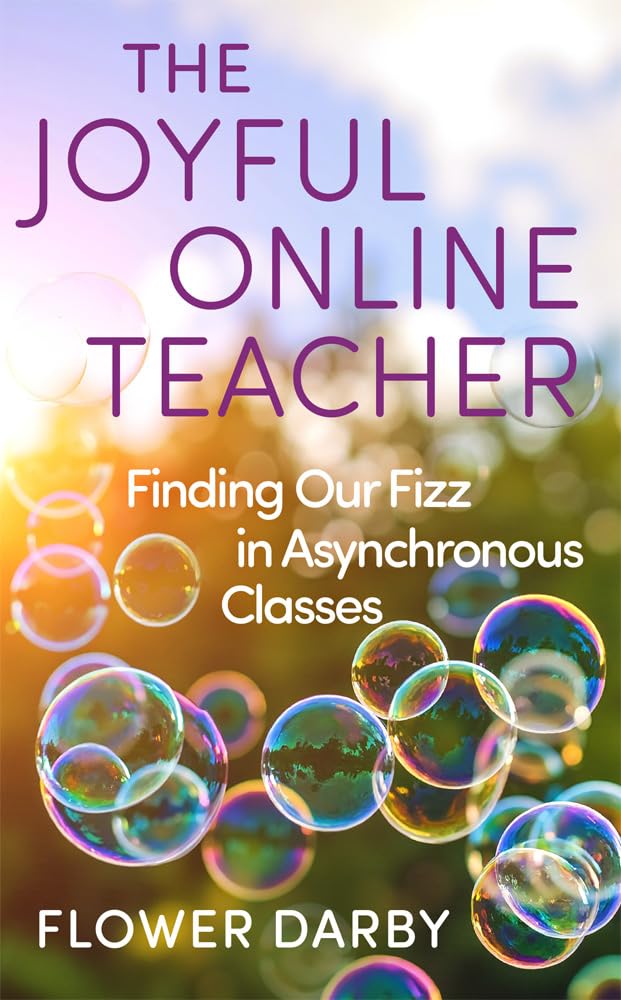

Join us as we celebrate the release of Flower Darby’s new book: This uplifting work highlights practical, research-informed approaches that foster instructor well-being along with student engagement, motivation, and belonging in every class, not just online. Readers are reminded of the meaningful impact small, intentional teaching practices can make in helping everyone flourish and succeed. Come enjoy good company, light refreshments, and a joyful gathering of colleagues as we honor this exciting contribution to teaching and learning. We look forward to celebrating with you! |